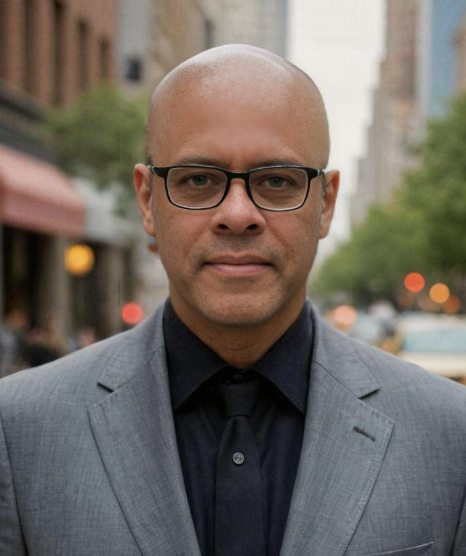
Background and Interests
I am a professor and researcher working at the intersection of computational linguistics, AI systems behavior, and human-machine teaming. My current research centers on semantic instability: the measurable ways in which meaning shifts, drifts, and degrades as it moves through language models and sociotechnical systems. The Computational Meaning Dynamics Research Group develops theory, tools, and techniques for detecting, characterizing, and exploiting this instability, with applications ranging from healthcare informatics to adversarial AI security. Our work draws on geometric methods, causal inference, and large-scale NLP experimentation.
My research perspective has been shaped by more than 30 years of work across academia, government, healthcare, and industry. I served as Chief Data Scientist and Director of the Data Science Department for Jackson Health Systems, where my work focused on applying data science and AI in complex healthcare environments. Earlier, as Information Sciences Division Chief at the Army Research Laboratory (ARL), I conceived, established, and led the Army’s Internet of Battlefield Things research program. That effort addressed fundamental challenges in integrating AI, intelligent systems, networking, and IoT capabilities for warfighters operating in dynamic, contested battlefield environments. My government research career also included service as a Section Head at the U.S. Naval Research Laboratory. I began my academic career on the faculty of the George Washington University, where I received recognition including a National Academies of Science Fellowship and multiple research grant awards. Alongside my academic and government work, I have been a serial entrepreneur, founding and operating companies in software engineering, information resource management services, and telecommunications equipment manufacturing, and I hold two patents.
Across these roles, a consistent theme has been the behavior of information and intelligent systems under conditions of complexity, uncertainty, and change. My earlier work in networking, distributed systems, battlefield intelligence, data science, and applied AI increasingly led to questions about how information is interpreted, transformed, and acted upon as it moves through human and machine systems. Computational Meaning Dynamics research extends that trajectory by treating meaning itself as a measurable and dynamic property of intelligent systems. The goal is not only to understand when semantic behavior becomes unstable, but to develop methods for detecting, predicting, and ultimately using those dynamics in the design, evaluation, and operation of AI-enabled systems.
Select Publications
-
William Lawless, Marco Brambilla, Stephen Russell (2026). Orchestrating Synthesized Human and AI-Agentic Workflows: AI Agency Benefits, Disruptions and Management. Human Factors in Robots, Drones and Unmanned Systems, AHFE International.
-
Satyajit Movidi, Stephen Russell (2026). The Personalization Paradox: Semantic Loss vs. Reasoning Gains in Agentic AI Q&A. Cloud Computing and Data Science. [Infographic]
-
Stephen Russell (2026). Un-Grounded Agency and the Stationarity Trap in Agentic Workflows. AAAI Workshop: Orchestrating Synthesized Human and AI-Agentic Workflows.
-
Stephen Russell (2026). When Workflows Stay Stable but Meaning Moves in Agentic Analyst Pipelines. Human Factors in Robots, Drones and Unmanned Systems, AHFE International.
-
Stephen Russell (2025). Beyond SMOTE: MoE-Driven and LLM-Based Resilience in Predictive Healthcare Models. Artificial Intelligence in Health. [Infographic]
-
Stephen Russell, Fabio Montes Suros, Kamal Babaei Sonbolabadi, Jia Zheng (2025). Rethinking Population Construction for Clinical AI: Patient Similarity for Surgical Site Infection Prediction. Springer Nature, Switzerland AG.
-
TR Arcieri, MD Cobler-Lichter, JM Delamater, AM Reyes, Nicholas Namias, Carl Schulman, Vincente Nelson, MD Buzzelli, Stephen Russell, KG Proctor, PJ Wetstein (2025). Translating Medical Coding to Deployment Readiness: Military-Civilian Partnership Surgeon Performance Analysis by a Novel CPT to ICTL Map.
-
Stephen Russell, Fabio Montes Suros, Venessa Goodnow, Jia Zeng (2025). VTE Surveillance: AI Enabled Human Machine Teaming for Veinous Thromboembolism.
-
Ira S. Moskowitz, Hesham Fouad, Stephen Russell, Alexander Velazquez (2024). A Mixture-of-Experts Flock: Examining Expert Influence. Bidirectionality in Human-AI Collaborative Systems.
-
Stephen Russell, Fabio Montes Suros, Ashwin Kumar (2024). Exploiting Machine Learning Bias: Predicting Medical Denials. Proceedings of the Association for the Advancement of Artificial Intelligence Spring Symposium 2024.
-
Maggie Wigness, Tarek Abdelzaher, Stephen Russell, Ananthram Swami (2022). Internet of Battlefield Things: Challenges, Opportunities, and Emerging Directions. IoT for Defense and National Security. [Full Text]
-
Ira S. Moskowitz, Pi Rogers, Stephen Russell (2022). Mutual Information and Multi-Agent Systems. Entropy.
-
Stephen Russell, Ashwin Kumar (2022). Providing Care: Intrinsic Human-Machine Teams and Data. Entropy. [Full Text]
-
Shaoran Li, Yan Huang, Chengzhang Li, Brian A. Jalaian, Y. Thomas Hou, Wenjing Lou, Stephen Russell (2021). Maximize Spectrum Efficiency in Underlay Coexistence With Channel Uncertainty. IEEE/ACM Transactions on Networking.
-
Stephen Russell, Brian Jalaian, Ira S. Moskowitz (2021). Re-orienting towards the Science of the Artificial: Engineering AI Systems. Systems Engineering and Artificial Intelligence.
-
Adam Cobb, Brian Jalaian, Nathaniel Bastian, Stephen Russell (2021). Towards Safe Decision-Making via Uncertainty Quantification in Machine Learning. Systems Engineering and Artificial Intelligence.
-
Stephen Russell, Ira S. Moskowitz, Brian Jalaian (2020). Separating the Forest From The Trees - Wavelet Contextual Conditioning For AI. Human-machine Shared Contexts.
-
Shaoran Li, Yan Huang, Chengzhang Li, Brian Jalaian, Stephen Russell, Y. Thomas Hou, Wenjing Lou, Benjamin MacCall (2019). A Real-Time Solution for Underlay Coexistence with Channel Uncertainty. 2019 IEEE Global Communications Conference (GLOBECOM).
-
Stephen Russell, Tarek Abdelzaher, Niranjan Suri (2019). Multi-Domain Effects and the Internet of Battlefield Things. Proceedings of the Military Communications Conference, (MILCOM) 2019.
-
Shaoran Li, Y. Thomas Hou, Wenjing Lou, Brian Jalaian, Stephen Russell, Benjamin MacCall (2019). Optimal Power Control with Channel Uncertainty in Ad Hoc Networks. MILCOM 2019-2019 IEEE Military Communications Conference (MILCOM).
-
Tarek Abdelzaher, Stephen Russell (2019). Towards an Intelligent Tactical Edge: An Internet of Battlefield Things Roadmap. Artificial Intelligence and Machine Learning for Multi-Domain Operations Applications.
-
Tarek Abdelzaher, Nora Ayanian, Tamer Basar, Suhas Diggavi, Jana Diesner, Deepak Ganesan, Ramesh Govindan, Susmit Jha, Tancrede Lepoint, Ben Marlin, Klara Nahrstedt, David Nicol, Raj Rajkumar, Stephen Russell, Sanjit Seshia, Fei Sha, Prashant Shenoy, Mani Srivastava, Gaurav Sukhatme, Ananthram Swami, Paulo Tabuada, Don Towsley, Nitin Vaidya, Venu Veeravalli (2019). Towards an Internet of Battlefield Things: A Resilience Perspective. IEEE Computer Magazine.
-
Brian Jalaian, Michael Lee, Stephen Russell (2019). Uncertain Context: Uncertainty Quantification in Machine Learning. AI Magazine.
-
Brian Jalaian, Stephen Russell (2019). Uncertainty Quantification in Internet of Battlefield Things. Artificial Intelligence for the Internet of Everything.
-
(2018). Artificial Intelligence For the Internet of Everything. Elsevier.
-
Theron T. Trout, Stephen Russell, Andre Harrison, Mark Dennison, Ryan Spicer, Evan Suma Rosenberg, Jerald Thomas (2018). Collaborative mixed reality (MxR) and networked decision making. Next-Generation Analyst VI.
-
Brian Jalaian, Timothy Gregory, Niranjan Suri, Stephen Russell, Laurel Sadler, Michael Lee (2018). Evaluating LoRaWAN-based IoT devices for the tactical military environment. Internet of Things (WF-IoT), 2018 IEEE 4th World Forum on.
-
Brian Jalaian, Alec Koppel, Andre Harrison, James Michaelis, Stephen Russell (2018). On Stream-centric Learning for Internet of Battlefield Things. 2018 AAAI Spring Symposium Series.
-
Yan Huang, Brian Jalaian, Stephen Russell, Hooman Samani (2018). Reaping the Benefits of Dynamic TDD in Massive MIMO. IEEE Systems Journal.
-
Ira S. Moskowitz, Stephen Russell, Brian Jalaian (2018). Steganographic Internet of Things: Graph topology timing channels.
-
Yan Huang, Brian Jalaian, Stephen Russell, Hooman Samani (2018). Technical Report on Efficient Integration of Dynamic TDD with Massive MIMO. arXiv preprint arXiv:1804.06143.
-
Stephen Russell, Tarek Abdelzaher (2018). The Internet of Battlefield Things: The Next Generation of Command, Control, Communications and Intelligence (C3I) Decision-Making. Proceedings of the Military Communications Conference, (MILCOM) 2018.
-
Ira S. Moskowitz, Stephen Russell, Niranjan Suri (2018). The Value of Information and the Internet of Things. Artificial Intelligence for the Internet of Everything.
-
Ira S. Moskowitz, Stephen Russell (2018). Valuable Information and the Internet of Things. 2018 AAAI Spring Symposium Series.
-
Tarek Abdelzaher, Nora Ayanian, Tamer Basar, Suhas Diggavi, Jana Diesner, Deepak Ganesan, Ramesh Govindan, Susmit Jha, Tancrede Lepoint, Ben Marlin, Klara Nahrstedt, David Nicol, Raj Rajkumar, Stephen Russell, Sanjit Seshia, Fei Sha, Prashant Shenoy, Mani Srivastava, Gaurav Sukhatme, Ananthram Swami, Paulo Tabuada, Don Towsley, Nitin Vaidya, Venu Veeravalli (2018). Will Distributed Computing Revolutionize Peace? The Emergence of Battlefield IoT. Proceedings of the 38th IEEE International Conference on Distributed Computing Systems (ICDCS 2018).
-
Hesham Fouad, Antonio Gilliam, Suleyman Guleyupoglu, Stephen M. Russell (2017). Automated Evaluation of Service Oriented Architecture Systems: A Case Study. Next-Generation Analyst V.
-
(2017). Autonomy and Artificial Intelligence: A Threat or Savior?. Springer.
-
Adrienne Raglin, Brian Jalaian, Michael Lee, Stephen Russell, Andre Harrison (2017). Human Variabilities in C2 Machine Learning.
-
Adrienne Raglin, Somiya Metu, Stephen Russell, Peter Budulas (2017). Implementing Internet of Things in a military command and control environment. Next-Generation Analyst V. [Full Text]
-
P. Hyden, R.G. McGrath, I.S. Moskowitz, S. Russell (2017). Managing Risk in High Assurance Systems by Optimizing Topological Resources. Journal of Software: Evolution and Process.
-
Ryan P. Spicer, Stephen M. Russell, Evan Suma Rosenberg (2017). The mixed reality of things: emerging challenges for human-information interaction. Next-Generation Analyst V.
-
Stephen Russell, Adrienne Raglin, Collandra Tate-Moore (2016). A Framework for Comparing Performance Assessment Outcomes using Performance-Consensus Vectors and Traditional Ordinal Data Measures to Aid Decision Support for Human-Systems Integration.
-
Niranjan Suri, Mauro Tortonesi, James Michaelis, Peter Budulas, Giacomo Benincasa, Stephen Russell, Cesare Stefanelli, Robert Winkler (2016). Analyzing the applicability of Internet of Things to the battlefield environment. IEEE. [Full Text]
-
Paul Hyden, Ira S. Moskowitz, Stephen Russell (2016). Fortification through topological dominance: Using hop distance and randomized topology strategies to enhance network security. 2016 AAAI Spring Symposium Series.
-
Stephen Russell, Ira S. Moskowitz (2016). Human Information Interaction, Artificial Intelligence, and Errors. 2016 AAAI Spring Symposium Series.
-
Mauro Tortonesi, Alessandro Morelli, Marco Govoni, James Michaelis, Niranjan Suri, Cesare Stefanelli, S. Russell (2016). Leveraging Internet of Things within the military network environment—Challenges and solutions. Internet of Things (WF-IoT), 2016 IEEE 3rd World Forum on.
-
Stephen Russell, Niranjan Suri, Rita Lenzi, Hesham Fouad (2016). Measuring and Evaluating Interoperability for Complex C2 Information Management System-of-Systems.
-
Benjamin Newsom, Ranjeev Mittu, Mark A. Livingston, Stephen Russell, Jonathan W. Decker, Eric Leadbetter, Ira S. Moskowitz, Antonio Gilliam, Ciara Sibley, Joseph Coyne (2016). Modeling User Behaviors to Enable Context-Aware Proactive Decision Support. Context-Enhanced Information Fusion.
-
Ira S. Moskowitz, Paul Hyden, Stephen Russell (2016). Network topology and mean infection times. Social Network Analysis and Mining.
-
Paul Hyden, Ira S. Moskowitz, Stephen Russell (2016). Using network topology to supplement high assurance systems. High Assurance Systems Engineering (HASE), 2016 IEEE 17th International Symposium on.
-
Napoleon C. Paxton, Stephen Russell, Ira S. Moskowitz, Paul Hyden (2015). A Survey of Community Detection Algorithms Based on Analysis-Intent. Cyber Warfare.
-
Mark A. Livingston, Stephen Russell, Jonathan W. Decker, Eric Leadbetter, Antonio Gilliam (2015). CEDARS: Combined exploratory data analysis recommender system. Large Data Analysis and Visualization (LDAV), 2015 IEEE 5th Symposium on.
-
Napoleon C. Paxton, Dae-il Jang, Stephen Russell, Gail-Joon Ahn, Ira S. Moskowitz, Paul Hyden (2015). Utilizing network science and honeynets for software induced cyber incident analysis. System Sciences (HICSS), 2015 48th Hawaii International Conference on.
-
Paul Hyden, Stephen Russell, David Jakubek, Napoleon Paxton, Ira S. Moskowitz (2014). Advancing Future Network Science through Content Understanding.
-
Napoleon Paxton, Ira S. Moskowitz, Stephen Russell, Paul Hyden (2014). Developing a Network Science Based Approach to Cyber Incident Analysis.
-
Napoleon C. Paxton, Dae-il Jang, Ira S. Moskowitz, Gail-Joon Ahn, Stephen Russell (2014). Discovering and analyzing deviant communities: Methods and experiments. Collaborative Computing: Networking, Applications and Worksharing (CollaborateCom), 2014 International Conference on.
-
W. F. Lawless, James Llinas, Ranjeev Mittu, Don Sofge, Ciara Sibley, Joseph Coyne, Stephen Russell (2013). Robust Intelligence (RI) under uncertainty: Mathematical and conceptual foundations of autonomous hybrid (human-machine-robot) teams, organizations and systems. Structure & Dynamics.
-
Stephen Russell, Victoria Y. Yoon (2011). Agents, availability awareness, and decision making. Intelligent, Adaptive and Reasoning Technologies: New Developments and Applications.
-
Paul Hyden, Stephen Russell (2011). Balancing Information Analysis and Decision Value: A Model to Exploit the Decision Process.
-
Paul Hyden, Elias Ioup, Stephen Russell (2011). Communicating uncertainty information across conceptual boundaries. Proceedings - Winter Simulation Conference.
-
Erik P. Blasch, Stephen Russell, Guna Seetharaman (2011). Joint data management for MOVINT data-to-decision making. Information Fusion (FUSION), 2011 Proceedings of the 14th International Conference on.
-
Jonathan W. Decker, Mark A. Livingston, Stephen Russell, Paul Hyden (2011). Use Cases for Visualizing Uncertain Computer Networks.
-
Erik P. Blasch, Guna Seetharaman, Stephen Russell (2011). Wide-area video exploitation (WAVE) joint data management (JDM) for layered sensing. Signal Processing, Sensor Fusion, and Target Recognition XX.
-
Stephen Russell, Victoria Yoon, Guisseppi Forgionne (2010). Cloud-based decision support systems and availability context: the probability of successful decision outcomes. Information Systems and e-Business Management.
-
Stephen Russell, Maliha Haddad, Margherita Bruni, Mary Granger (2010). Organic Evolution and the Capability Maturity of Business Intelligence.. AMCIS.
-
Shibnath Mukherjee, Zhiyuan Chen, Aryya Gangopadhyay, Stephen Russell (2008). A secure face recognition system for mobile-devices without the need of decryption. Workshop on secure knowledge management.
-
Stephen Russell, Victoria Yoon (2008). Applications of wavelet data reduction in a recommender system. Expert Systems with Applications.
-
Stephen Russell, Aryya Gangopadhyay, Victoria Yoon (2008). Assisting decision making in the event-driven enterprise using wavelets. Decision Support Systems.
-
S. Russell, G. Forgionne, V. Yoon (2008). Presence and availability awareness for decision support systems in pervasive computing environments. International Journal of Decision Support System Technology.
-
Giusseppi Forgionne, Stephen Russell (2008). The Evaluation of Decision-Making Support Systems' Functionality. Encyclopedia of Decision Making and Decision Support Technologies.
-
Giusseppi Forgionne, Stephen Russell (2008). The Use of Simulation as an Experimental Methodology for DMSS Research. Encyclopedia of Decision Making and Decision Support Technologies.
-
Giusseppi Forgionne, Stephen Russell (2008). Unambiguous Goal Seeking Through Mathematical Modeling. Encyclopedia of Decision Making and Decision Support Technologies.
-
Stephen Russell, Victoria Yoon (2005). Heterogeneous Agent Development: A Multi-Agent System for Testing Stock Trading Algorithms. AMCIS 2005 Proceedings.
-
James Sorace, Kip Canfield, Steven Russell (1997). Functional bioinformatics: the cellular response database. Frontiers in Bioscience.