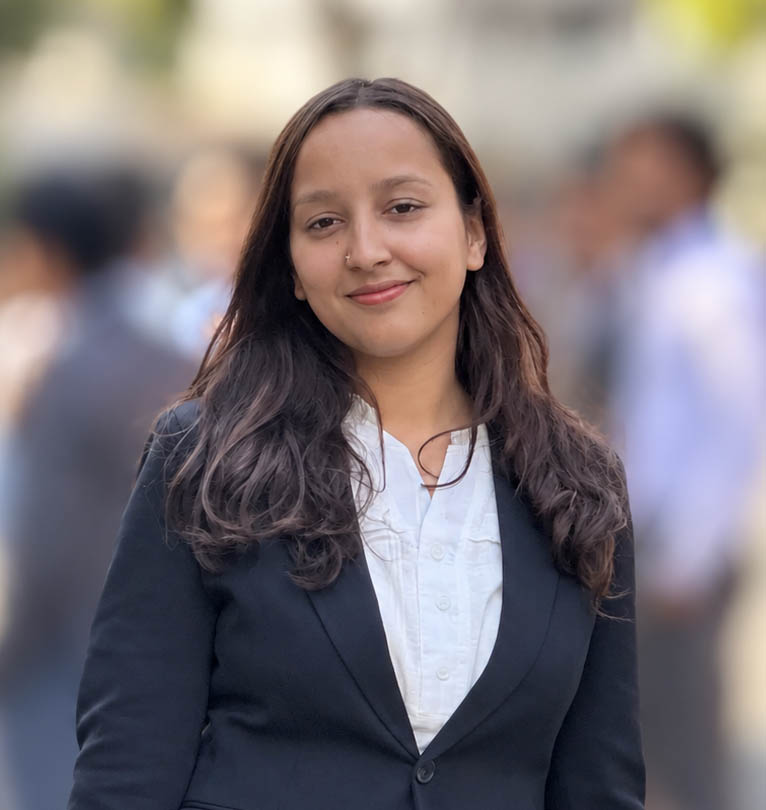
Dept. of Intelligent Systems and Robotics, University of West Florida
Background
I am a graduate research assistant with a background in computer engineering and computer and information sciences. My research focuses on building AI systems that are measurable, trustworthy, and explainable, with particular interests in machine learning, large language models, natural language processing, computer vision, and agentic AI systems.
My current work examines representation learning for structured and sequential data, with an emerging focus on uncertainty quantification: understanding not only what a model predicts, but how confidently that prediction should be trusted. This work supports broader questions around the reliability, interpretability, and evaluation of modern AI systems.
Research
EZ-Crossword: AI Crossword Solver and Generator — Hand it a crossword and it solves it; hand it a theme and it builds one. Solving is framed as question answering with a twist: a transformer QA model proposes candidate answers per clue, and a constraint solver reconciles them against shared letters at intersections, so the model only needs to be a good ranker, not right on the first try. Generation runs the same components in reverse: laying out a valid grid, then generating clues specific enough to be fair. Live demo.
Reproduction Study: Voice Traffic Fingerprinting (WiSec 2020) — Reproduced a published attack that fingerprints encrypted smart-speaker voice commands from traffic patterns alone, across three architectures (CNN, LSTM, stacked autoencoder) and two traffic representations. Matched the paper closely on the main experiment (CNN: 99.05% vs. 99.22% reported).
Printable-Area Detection Pipeline — Given a photo of any product, this pipeline identifies exactly where a logo can be printed and how. It combines a vision-language model for part-level understanding, SAM2 for segmentation grounded on those parts, and a monocular depth model for flatness scoring, then ranks candidate print zones by a composite score of area, flatness, material, and texture. The pipeline explicitly flags low-confidence regions, such as transparent or reflective materials, instead of scoring them as if they were certain.